 QED returns, 23rd-24th September 2023 – with Lucky Cooke, Andrew Smyth, Dan Friesen from Knowledge Fight podcast, and more!
Tickets to QED 2023 are on sale now! To get your ticket to the highlight of the skeptical calendar, visit qedcon.org/tickets.
QED, the weekend celebration of science, reason and critical thinking, returns for 2023 with another exciting line-up of main stage speakers, live podcast recordings, panel discussions, interactive workshops, and more.
This year, QED will be taking place on 23rd-24th September at Manchester’s Mercure Piccadilly Hotel, with tickets costing £149 for the weekend (£129 for students/under 18s).
As usual, every single ticket entitles the holder to entry all conference events across the weekend, including a night of comedy and magic on Saturday night, and our completely-free one day Skepticamp event on Friday 22nd September.
Appearing at QED 2023 will be:
- Lucy Cooke: best-selling author and broadcaster with a Masters in zoology, Lucy has created history documentaries for the BBC, National Geographic, ITV and Discovery.
- Andrew Smyth: Aerospace engineer and baker, Andrew starred in the Netflix series Baking Impossible and made the 2016 final of The Great British Bake Off.
- Dan Friesen: co-host of Knowledge Fight, a podcast that dissects right-wing propagandist Alex Jones, Dan worked as an expert consultant in the Sandy Hook defamation cases.
- Professor Pragya Agarwal: Geospatial and behavioural data scientist, Pragya was awarded a Transmission Prize in 2022 for ‘making big complex scientific ideas accessible’.
- Professor Jason Arday: Sociologist and writer known for his research on race and racism, Jason is the youngest black person ever appointed to a professorship at Cambridge.
- Colin Angus: Senior Research Fellow and lead modeller in the Sheffield Alcohol Research Group, one of the world’s leading centres for alcohol policy research.
- Dr Debbie Ging: Researcher on gender, sexuality and digital media, with a focus on anti-feminist men’s rights politics, incel subculture and the radicalisation of boys and men.
- Dr Alice Howarth: Cancer cell biologist, open research advocate and science communicator, Alice is vice president of the Merseyside Skeptics Society, and deputy editor of The Skeptic.
- Dr Joe Ondrak: OSINT Investigator tackling harm caused by online mis- and disinformation, analysing disinformation ranging from hostile state campaigns to domestic conspiracy groups.
- Mick West: Author, retired software engineer, and creator of the site Metabunk, which uses crowdsourcing and technical analysis to investigate UFO cases.
- Professor Chris French: Professor of Anomalistic Psychology and former editor of The Skeptic, Chris will be leading an interactive workshop on how to test paranormal claims.
- InKredulous: Comedy panel show and stalwart of QED, with previous guests including Jon Ronson, Andy Zaltzman, Kate Smurthwaite, Steve Novella, Natalie Haynes and more.
- Skeptics with a K: the longest-running skeptical podcast in the UK, featuring Mike Hall, Dr Alice Howarth, and Michael Marshall.
- And much more, still to be announced.
So, don’t delay – grab your QED ticket today and we’ll see you in September!
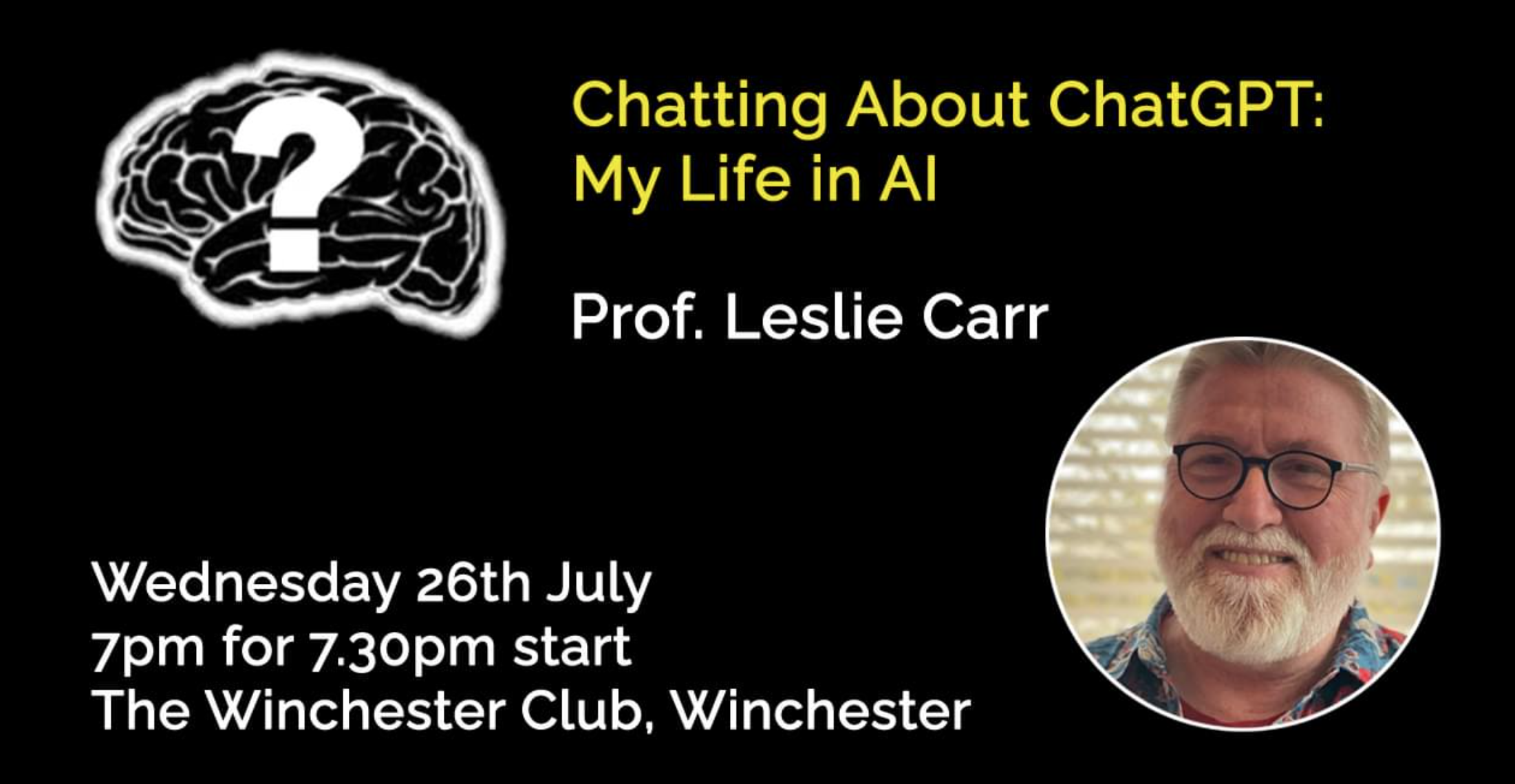 The rise of AI is a complicated story about advanced research, emerging data oligopolies like Facebook and Google, and big tech venture capitalism. Until recently, the only people who used AI were boffins in University computer laboratories or characters in Hollywood films.
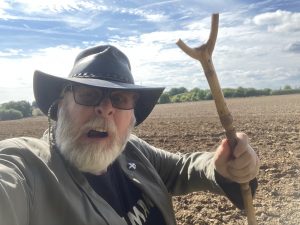 Lockdown was a tough time for many. For freelancers like Stevyn Colgan it meant loss of work and an uncertain future. And so, with the world on hold, he decided to rethink the way he lived. Over the next two years he fixed his physical and mental health and became the happiest, fittest and healthiest he’d been in decades. But the way he did it was by looking back, not forward. He discovered that many of the ‘old ways’ found within folk tradition, witchcraft and druidism actually had strong foundations in science. There’s no woo woo in this talk – Colgan’s contention is that the best way for society to move forward is to learn from the past. Isn’t that the basis of all good science?
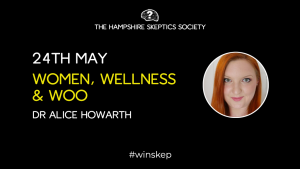 We all want to be well, right? Whether you’re a bit run down and just need a pick me up to get through the next working week, you’re suffering symptoms of a long-standing condition that you just can’t figure out or you’re reaching an age where you want security in your long-term health.
 Why can’t we think straight when hungry? What’s the point of nightmares? And why can’t we forget embarrassing memories?
 We hope to have the one and only Robin Ince to do a talk at Winchester Skeptics later in the year – but in the meantime, you can find him at our favourite bookseller,
  From an evolutionary perspective, religion presents something of a challenge. It is ubiquitous but in some cases religious cognition and behaviour can be costly and even dangerous while (to some) serving no obvious function. So why is religion found in every corner of the globe? Is it just a collection of highly successful memes or a “mind virus” as some dismissively label it? is it the inevitable but largely benign by-product of minds highly evolved for social living? Or are there some real evolutionary benefits to religious cognition?
 Can An Imperfect Movement Save The World?
 Britain has a long and complex migration history, and migration consistently appears as a talking point in politics and the news. Yet the story of Britain is the story of comings and goings, it is a story that underpins our language, economic systems, traditions and cultures. Join Liberty from the