
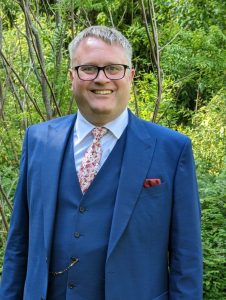
 Daily Life in Georgian England — What the Evidence Really Shows – Prof Edward Rochead
Life in 18th-century England is often imagined as static, parochial and grim – a world of unquestioned hierarchies, limited diets and little social movement. But how much of that picture is grounded in evidence, and how much is modern myth-making?
This talk examines Georgian daily life through an unusually rich primary source: the decades-long diary of James Woodforde, a Winchester-educated country parson who recorded, in meticulous detail, what he ate and drank, how he travelled, what he spent, who he encountered, and how he practised charity.
Taking a sceptical, evidence-led approach, we use Woodforde’s own data to test common assumptions about the period. The results reveal a society far more mobile, socially nuanced and materially varied than popular history suggests – and expose how easily narratives harden when we fail to return to the sources.
Wry, occasionally eyebrow-raising, and grounded firmly in contemporary records, this is Georgian England not as we imagine it, but as it can be observed.
Bio
Professor Edward Rochead is a mathematical engineer by profession and an historian of science and society by inclination, with a particular interest in how historical narratives are formed, simplified, and sometimes distorted over time.
Drawing on primary sources, institutional records and personal archives, Edward’s work explores how everyday lives and overlooked individuals can challenge comfortable assumptions about the past.
Recent talks have focused on Georgian England (such as the one for Hampshire Skeptics), and on the lives of Hertha Ayrton and Amy Johnson, using biography as a lens to examine how class, gender, religion and institutional power shape what history chooses to remember – and what it quietly forgets.
Edward is especially interested in sceptical approaches to history: asking what the evidence actually shows, how stories harden into “truths”, and why revisiting original sources can still surprise us.
Standard Stuff
Talks are usually on the 4th Wednesday of every month, at 7:00 for 7:30, at The Winchester Club in Winchester. Please take a look at the FAQs for more info.
Admission is £5 which also gives you an entry in the book raffle. We take cash and major cards (cards preferred).
The event is in two parts – the talk and then a Q&A after the interval. We encourage you to support the venue by indulging in the available drinks before and during the event.
You are also welcome to join us for a drink in the bar after the event.
 (Paper by Erik Meilak, Neil J. Gostling*, Pauline Provini, Colin Palmer and Markus O. Heller.)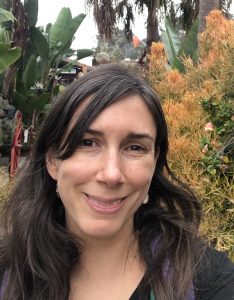
 The Soldier in Later Medieval England (
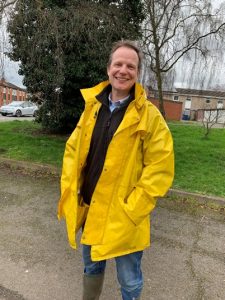 Working with – rather than against – nature to ‘solve’ hazards created by climate change is a very appealing idea. Measures such as headwater woodland and peatland restoration, beaver reintroduction, leaky dams, urban greening, and salt marshes have all been used in the UK.
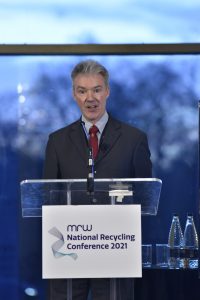 Satellite launches and re-entries are changing the chemistry and physics of the middle and upper atmosphere.
 Behavioural impacts on health are much discussed when it comes to noncommunicable diseases – the adverse consequences of obesity, smoking, alcohol consumption, and much more.
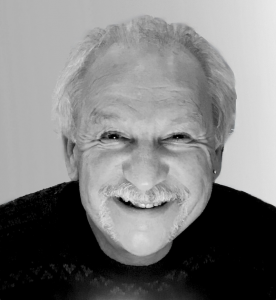 If you believe Sir Tim Berners-Lee invented the Internet, then Mel Croucher invites you to think again.
 We often assume we understand our own environmental impact, but recent research suggests we may be viewing waste through a kind of blindfold. This talk explores how that blindfold forms, what happens when it is lifted, and how clearer messages can support more sustainable choices.
 The Future of Personalised Healthy Ageing