Winchester Discovery Centre, Jewry St. 7.00 for 7.30pm
 This talk is a fine introduction into the age-old philosophical debate as to whether we have free will, or whether we live determined lives.
Pearce approaches the subject in a lively manner, explaining terms clearly and using anecdotes to break down some of the heavier philosophy so that it is available to the popular audience. Now that we are understanding our genetic heritage and our neurology better, can we account for all our characteristics and decisions? The author also looks at how theories of free will and determinism integrate with religion, particularly Christianity. If we live under the illusion of free will, do religions need reassessing? How does free will work when God knows what we are doing in advance? Does God have free will? How does prophecy interfere with free will? How is our justice system affected if we know exactly why people commit crimes?
These and other crucial questions are investigated with a deft touch and uses recent and important scientific findings to support the thesis supplying a valuable overview to the subject.
Jonathan M.S. Pearce is a teacher from south Hampshire, UK, who has dedicated many years to studying all manner of things philosophical and theological. Having studied for a Masters in Philosophy from the University of Wales, TSD, he also holds a degree from the University of Leeds, and a PGCE from the University of St Mary’s, Twickenham. As a founder member of the Tippling Philosophers, a friendly group of disparate believers and non-believers (and sort-of believers) based in Hampshire, he is a big advocate of casual philosophy groups meeting over pints of good ale. He lives with his partner (and twin boys) and wonders how she puts up with him.
 Conspiracy theories are everywhere – and, arguably, always have been. What influences us to believe or reject them? Why do some events give rise to more conspiracy theories than others? What does the prevalence of conspiracy theories say about us as a society? And how is The Simpsons like an ancient Babylonian sheep’s liver? This whirlwind tour through conspiracy theory psychology will focus particularly on how suspicion, paranoia, and ambiguity help us to make sense of an uncertain world.
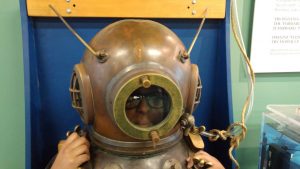 Have you ever wondered how to inspire non-science people with science, technology, and critical thinking?
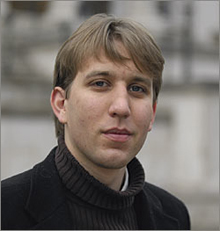 Chris Lintott is a Professor of Astrophysics in the Department of Physics at Oxford University. He is involved in a number of popular science projects aimed at bringing astronomy to a wider audience. He is probably best known as the main presenter of the BBC series, The Sky At Night.
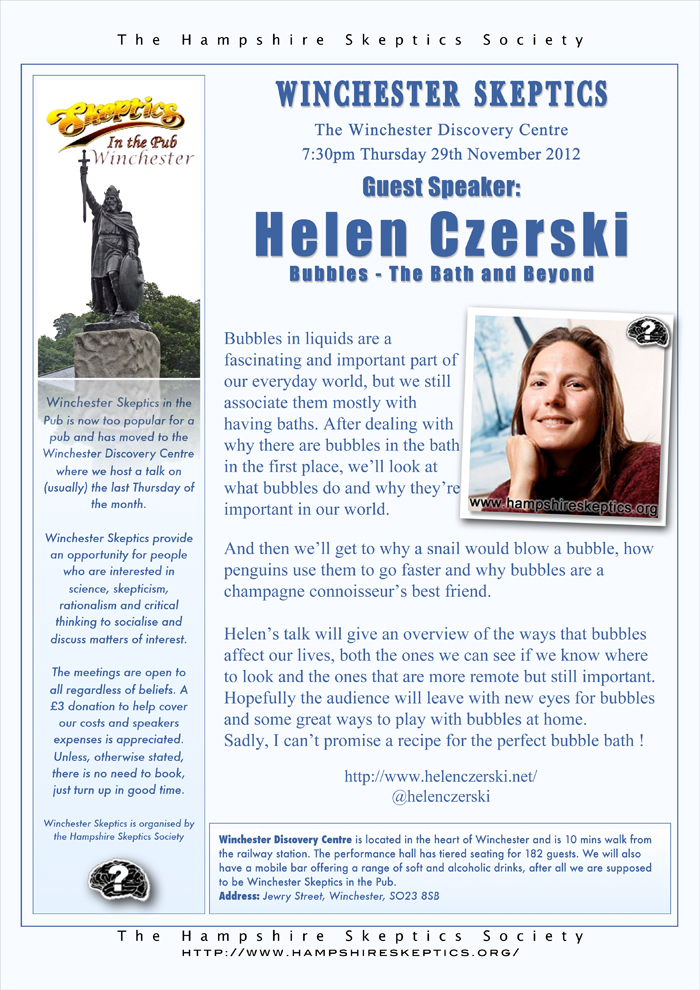
 Helen Czerski
 David Gorski
 Emma McClure
 Caroline Rance
 Phil Scraton
 Kavin Senapathy
 Simon Singh