
Indian philosophy is full of interesting ideas on materialism and atheism. This might come as a surprise to many in the West, where, in the popular imagination, India is a land full of mystical gurus and religious fervour; a spiritual hotbed- a place where you ‘find yourself’, whatever that may mean. So, the news that the idea of ‘falsificationism’ was anticipated by Indian materialists (known as Charvakas) 1700 years before Karl Popper may be surprising.
In fact, Indian materialists denounced the authority of the Vedas, ridiculed the idea of reincarnation, and rejected mind-body dualism; there is very little in Indian materialism that is not backed up by modern science.
The talk will focus on the main tenets of Indian materialism originating from the atheist branch of Indian philosophy, alternately called Charvaka, Lokāyata, and Bṛhaspatya. It will also suggest reasons for their obscurity in India and elsewhere.
Dr Surja Datta is a senior lecturer at Oxford Brookes University. His latest book “A History of the Indian University System: Emerging from the Shadows of the Past” is published by Palgrave Macmillan. His current book project is provisionally titled “The Creative Society: Calcutta 1815- 1955”. Surja became interested in Indian materialism while researching for his current book.
We ask for a £3 donation (at the door) that doubles as a raffle ticket to win a book prize to cover speaker expenses and the cost of the venue.
 You barely go a week without some puff piece article offering the ‘secret’ of happiness, or 5 easy steps to make yourself happy. They usually mention

 Roll up! Roll up! Roll up! Gather ye round the travelling caravan, as Snake Oil Salesman Ash Pryce demonstrates the miraculous curative abilities of psychic surgery taught him by a wise man in the Philippines (or a magicians’ tool book, whichever sounds more wondrous).
 Can you be brainwashed in 60 minutes?
 Gin, bunting and bloody railways: Why everything you thought you knew about the British Empire is Wrong.
 Aliens among us
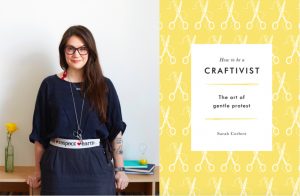
 Activism often conjures up quick transactional signing of petitions, clicktivism, loud and aggressive ways to demand justice. But if we want a world that is beautiful, kind and fair, shouldn’t our activism be beautiful, kind and fair? Award-winning campaigner and Founder of the global Craftivist Collective Sarah Corbett shows how to respond to injustice not with apathy or aggression, but with gentle, effective protest. Sarah Corbett set up the Craftivist Collective to facilitate and encourage this form of activism across the UK and around the world. She will be talking about her book ‘How To Be A Craftivist: the art of gentle protest’ a manifesto for a more respectful and contemplative activism; for conversation and collaboration where too often there is division and conflict; for using craft to engage, empower and encourage us all to be the change we wish to see in the world. She will explain her gentle protest principles with practical examples of her campaigns (including campaigns she’s won!) and stories as a burnout, introverted activist.