
Winchester Discovery Centre, Jewry St. 7.00 for 7.30pm

Cryogenics typically works with liquid nitrogen (-196 degrees C or 77 K) and liquid helium (-268.8 degrees C or 4.2 K). Down at these temperatures, all sorts of unusual things can happen – electrical resistance can disappear, almost anything, from frogs to surfers, can levitate, liquid can climb out of its container, biological processes can be slowed almost to a halt.
With some deft application of science, some clever calculations and some ingenious engineering, all of this is possible and more – yet for some reason, whenever you say you work in cryogenics, the first thing people ask is, “Do you freeze dead people? Or aliens?”
Join us to uncover some of the incredible things that cryogenics can do – and already has done – for you. We won’t be freezing any dead people but we will explain why it’s currently not a particularly sensible idea – and we may freeze an alien or two…
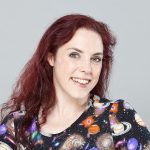
About Jess
Jess Spurrell has a PhD in Cryogenic Engineering & Superconductivity which is almost entirely unrelated to her MEng degree in Aeronautical and Astronautical Engineering with European Studies (when studying rocket science, why not do it in French for a year!).
She has given over 40 talks, workshops and demonstrations around the UK in schools and colleges plus at Winchester and Brighton Science festivals, Science Show-off, Bright Club Southampton, Researchers’ Café, The Science Room @ the Art House, Pint of Science, U3A, Café Scis, Skeptics and more.
Since April 2016 she was also managing the RCUK-funded Talk to US! school-university partnership initiative and since January 2017 this role has morphed into the university’s first School-University Partnership Officer.

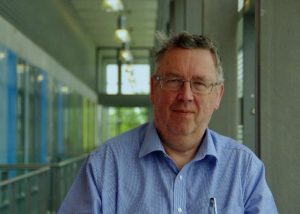 Hardly a day goes by without the publication of a story in the press informing us that by 2030 over 30% of UK jobs could be replaced by robotic systems. Historically the introduction of technology has enhanced the experience of the workforce. The introduction of advanced robotics however is associated with the workforce polarization into either high-skilled, highly-paid or low-skilled, poorly-paid employment with the loss of mid-skilled jobs. The presentation will go behind the hype and look at the current state of robotic systems, and how its integration with artificial intelligence has led to this situation.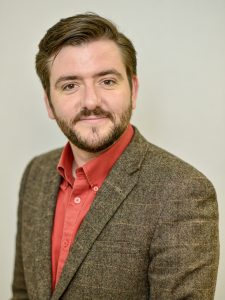

 This talk is a fine introduction into the age-old philosophical debate as to whether we have free will, or whether we live determined lives.
 Conspiracy theories are everywhere – and, arguably, always have been. What influences us to believe or reject them? Why do some events give rise to more conspiracy theories than others? What does the prevalence of conspiracy theories say about us as a society? And how is The Simpsons like an ancient Babylonian sheep’s liver? This whirlwind tour through conspiracy theory psychology will focus particularly on how suspicion, paranoia, and ambiguity help us to make sense of an uncertain world.
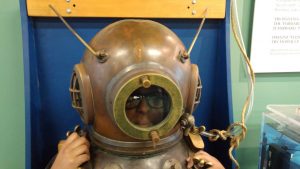 Have you ever wondered how to inspire non-science people with science, technology, and critical thinking?
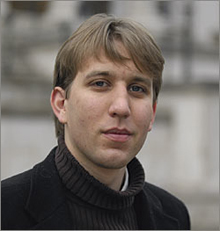 Chris Lintott is a Professor of Astrophysics in the Department of Physics at Oxford University. He is involved in a number of popular science projects aimed at bringing astronomy to a wider audience. He is probably best known as the main presenter of the BBC series, The Sky At Night.